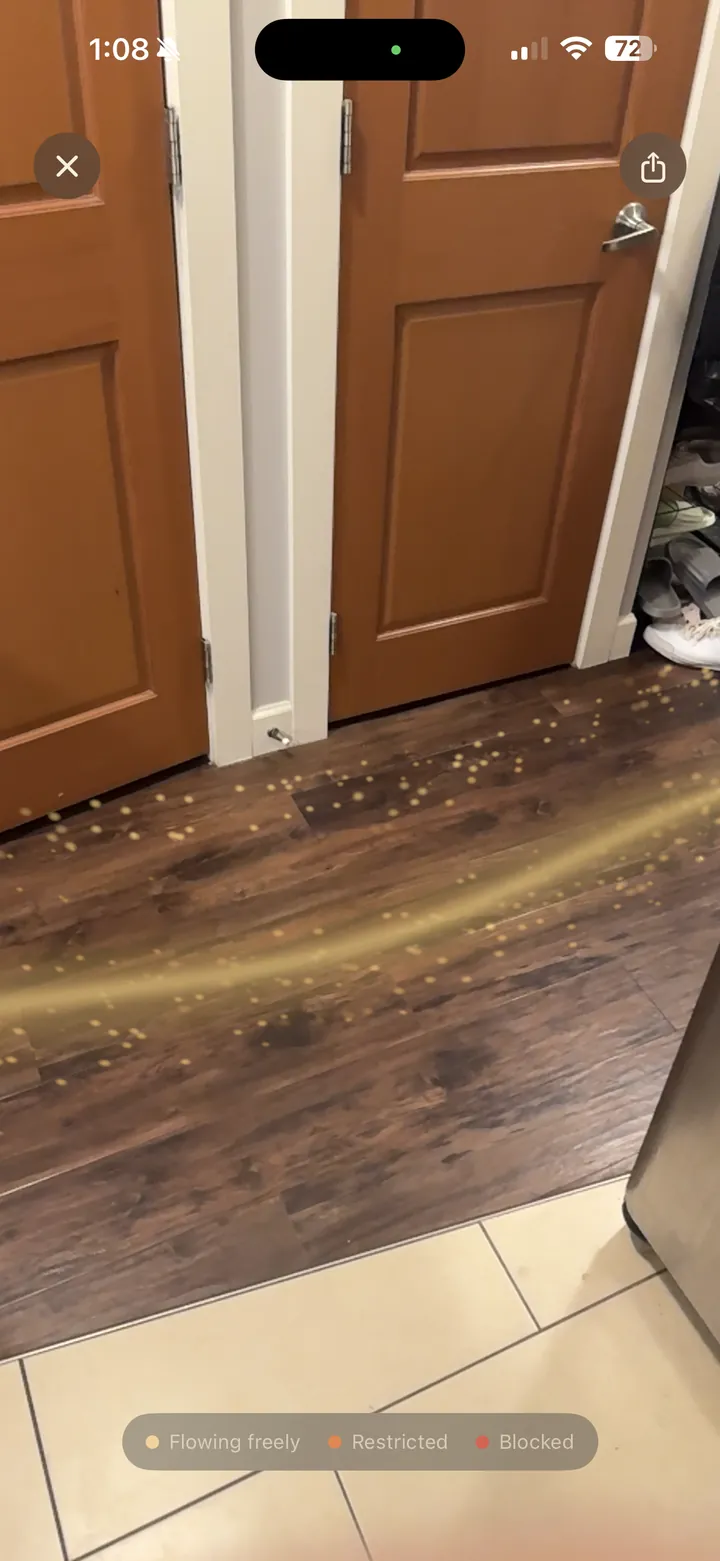
 Feng Shui Scan
What Feng Shui is, and what it is not
The name means "wind and water". The practice began with choosing sites in a landscape and was later applied to the inside of houses: where the door is, how rooms connect, where the bed and the desk stand.
It is worth saying plainly that Feng Shui is a tradition of interpretation. Its statements about qi are not established by evidence, and no arrangement of furniture promises wealth, health or luck. What keeps it useful to a sceptic is that many of its rules describe things people notice anyway: a hall you have to squeeze through, a bed with its back to the door, a room nobody goes into.
The main schools
Form school is generally regarded as the older approach. It reads shape and movement: the entrance, the route through the home, what lines up with what, and where furniture stands. It needs no compass and no birth date. The room guides here, and the app, work in this school.
Compass, or classical, school adds direction and time. Eight Mansions gives each person favourable and unfavourable directions from a Kua number based on birth year. Flying Stars charts a building from the direction it faces and the period in which it was built. Both need an accurate compass reading.
Black Hat, also called BTB, was popularised in the West in the late twentieth century. It lays the Bagua over a home lined up with the front door rather than with compass points, which makes it easy to use and is also why classical practitioners often reject it.
These schools can give different advice about the same room. Where they do, the guides say so.
Five ideas every room guide uses
- The entrance is the mouth of qi. Tradition holds that a home takes in its flow at the front door, so what the door faces and how open the entryway is come first.
- Flow should move without rushing or stalling. Long straight lines are said to speed it up, and blocked or crowded spaces to stop it. A whole-home walkthrough follows that route.
- The command position. Where you sleep or work, you should see the door without being in line with it, with a solid wall behind. This decides most of a bedroom and a home office.
- The five elements. Wood, fire, earth, metal and water, each tied to colours, shapes and directions, and related to one another in a cycle that produces and a cycle that restrains.
- The Bagua. A map of eight life areas around a centre, laid over a floor plan either by the entrance or by compass. You can try both with the Bagua map tool.
Where to start: one room
Choose the room you use most, or the entry, and ask four form-school questions. Can the door open fully? Is the floor between the door and the middle of the room clear? From the main seat or the bed, can you see the door? Is there a wall behind you?
Change one thing and live with it for a week before the next. A living room usually comes down to seating, a kitchen to the stove and the working route around it, and a bathroom mostly to its door. Leave compass directions and elements until the layout is settled, since they are where the schools disagree most.